
Science
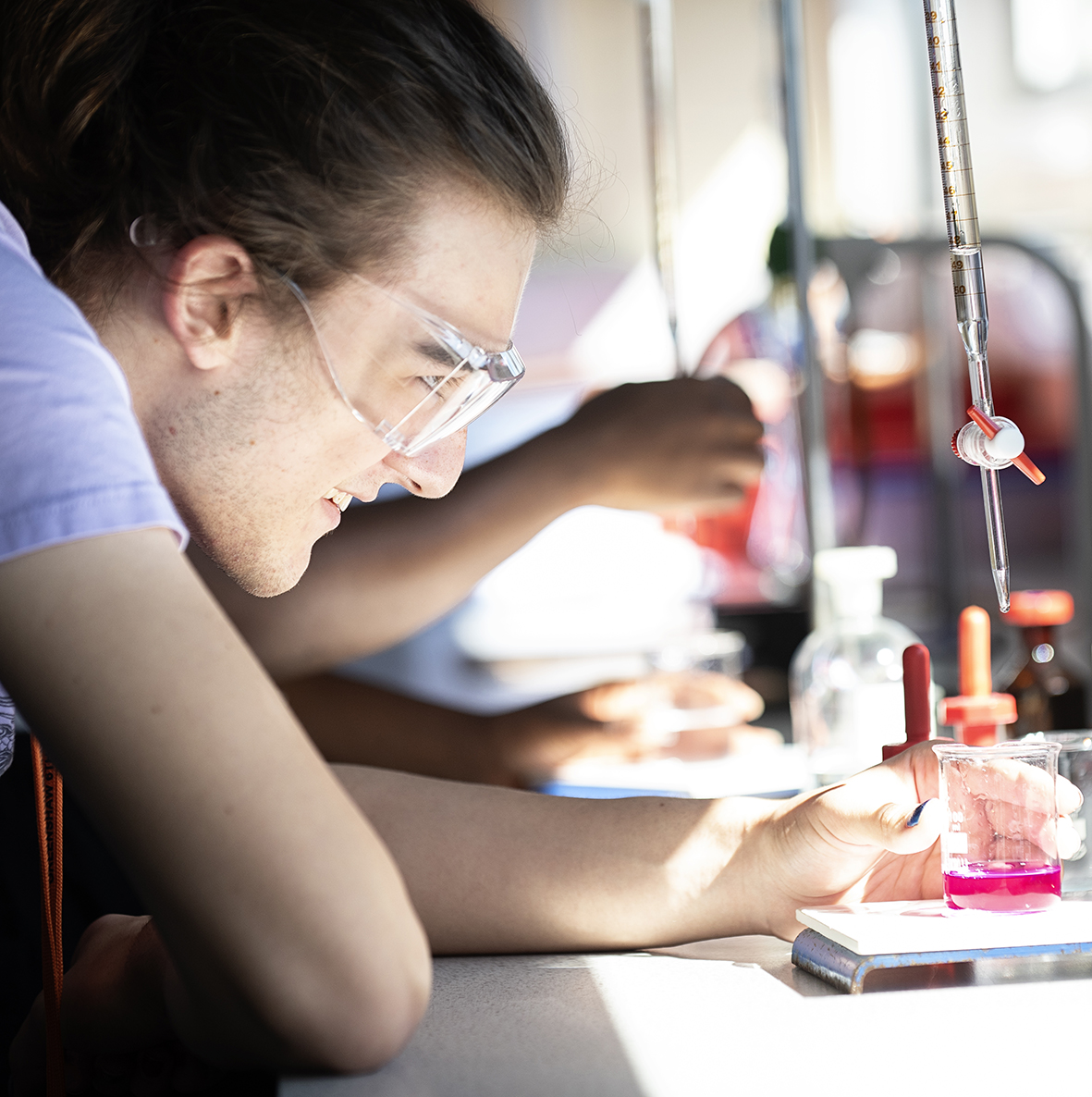
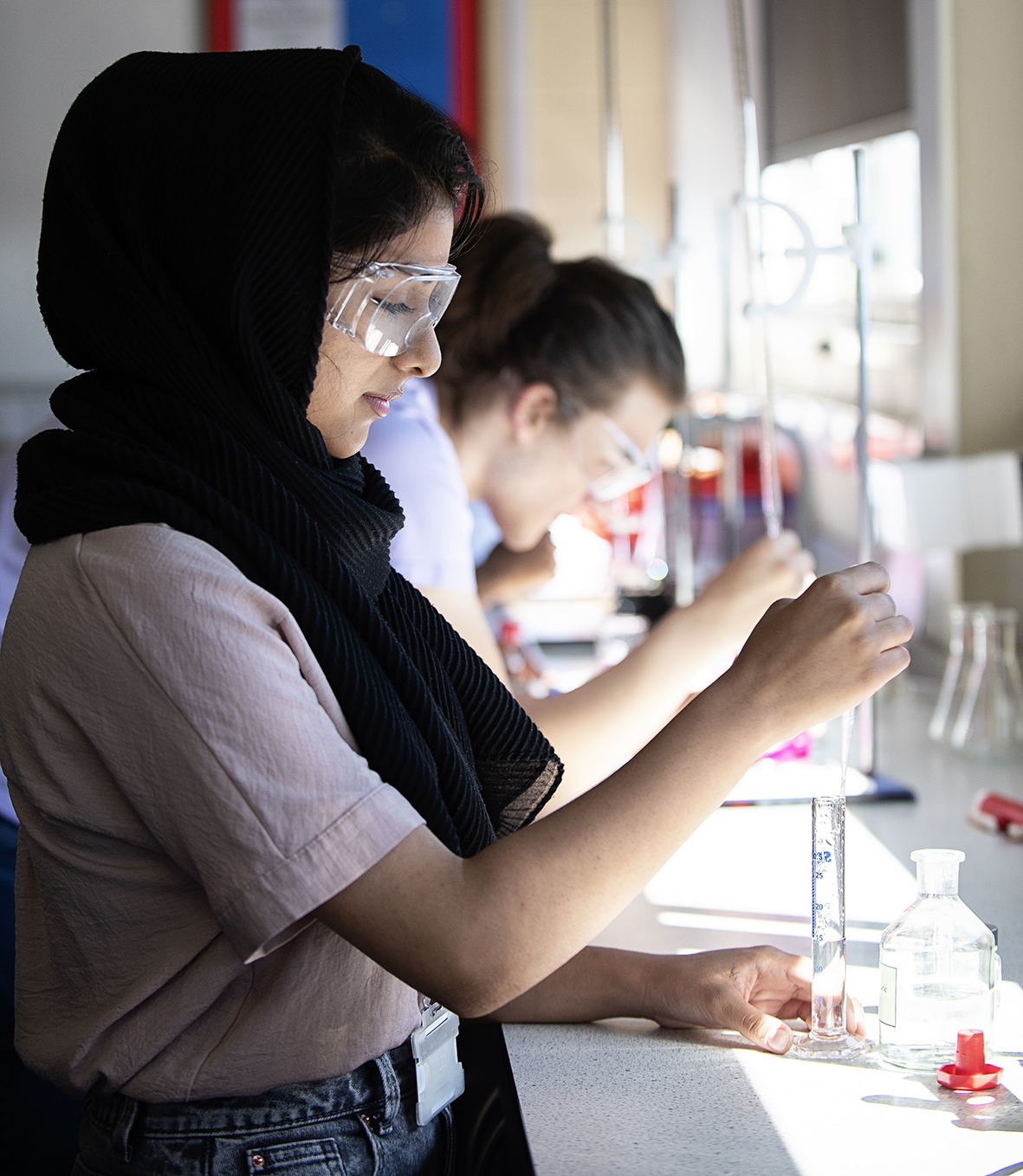
Science is an exciting and dynamic learning experience, particularly for our younger students, many of whom enter a specialist science laboratory for the first time. Science club for members of Year 7 is designed to enrich the students’ understanding of science and links school science with everyday life, while Science Week celebrates events nationwide.
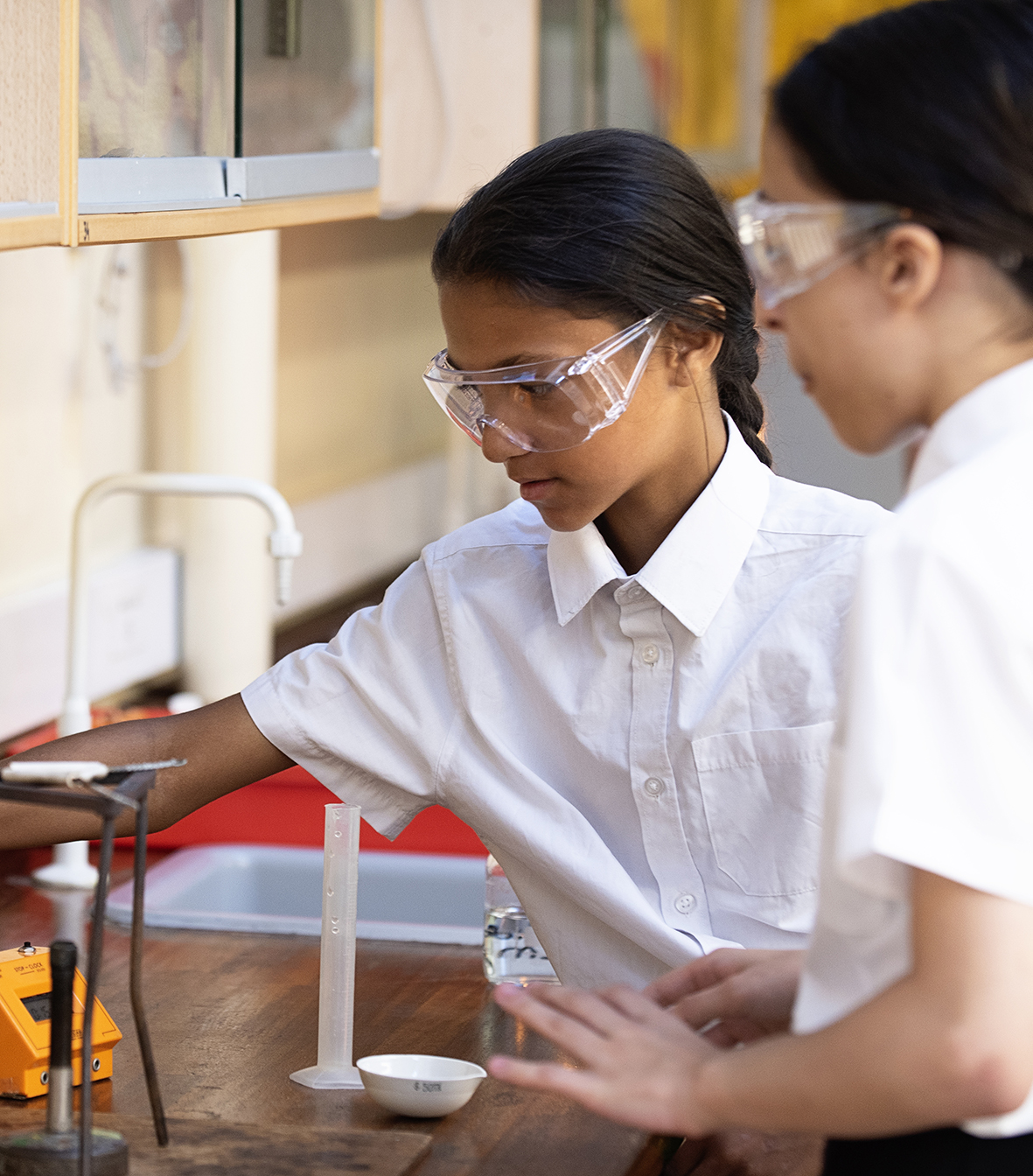
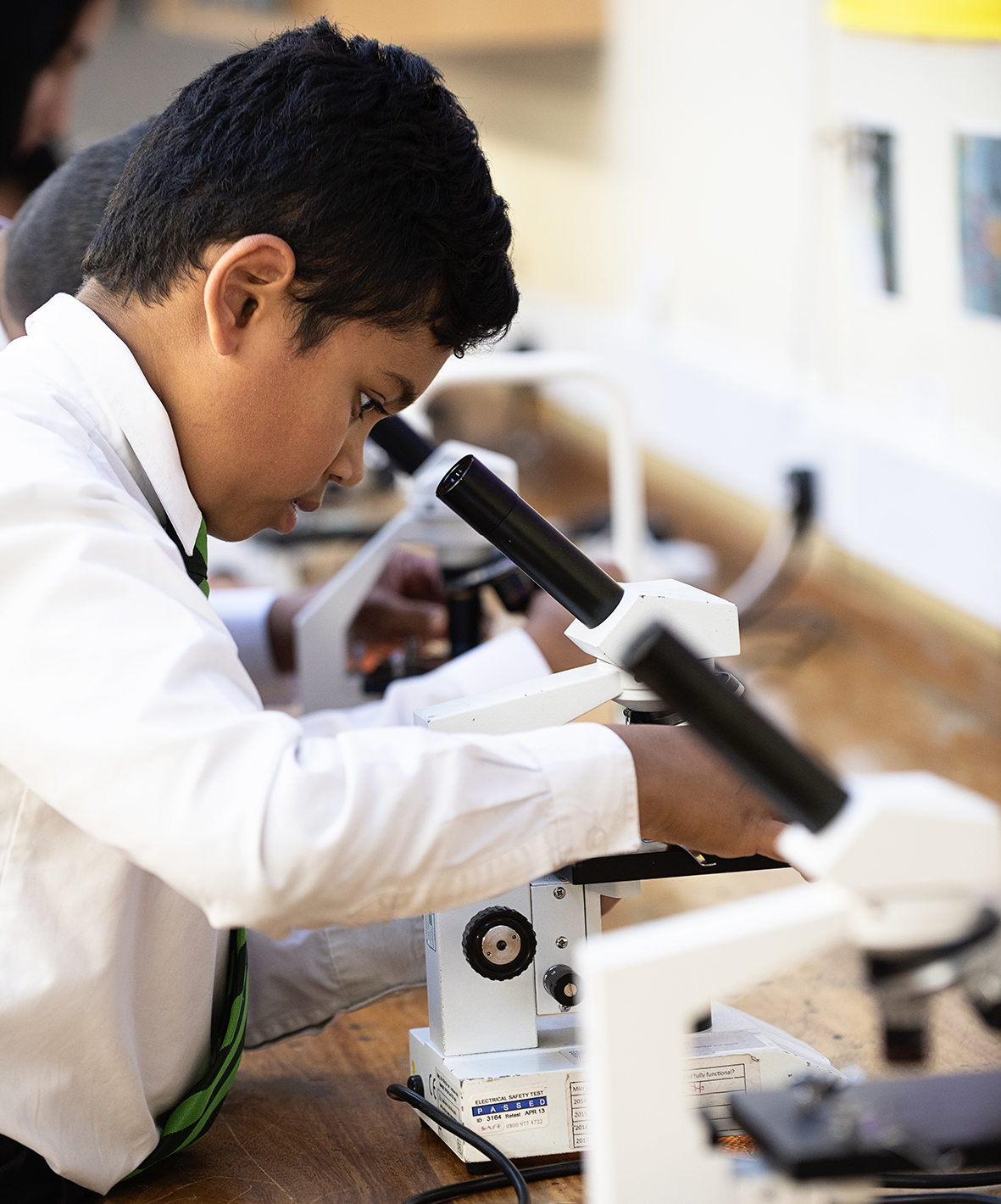
All students at Greenshaw study science from Years 7 through to Year 11. In all years, students have the opportunity to learn through a variety of methods, whether this be practical experiments or class discussions.
In Year 10 and 11, all students complete combined science or triple science using the AQA trilogy specification:
- Combined Science – chemistry, biology, physics (compulsory, unless studying triple science) – two GCSE grades.
- Triple Science – chemistry, biology, physics – three GCSE grades.
At post-16, students can choose to follow either A Level Biology, A Level Chemistry or A Level Physics using the OCR A specification. During A Level studies, students participate in enrichment and extension activities, developing their understanding and skill within science. In common with other departments, the science team connects with universities, organising speakers to visit Greenshaw and talks and activities at universities. Both Year 12 and Year 13 students are encouraged to attend numerous university summer schemes and lectures. Throughout the year, students represent the school in science competitions, such as Salter’s Top of the Bench competition.
Key Stage 3
What are the Big Ideas in science?
| Big Idea | What is it? | |||
|---|---|---|---|---|
| Biology |
Living organisms |
All living organisms are made of cells, which are organised into tissues, organs and systems that carry out the processes of life. |
||
| Interdependency |
Every organism depends on the living and non-living parts of its environment, so a change in one part has consequences that spread through the whole system. |
|||
| Chemistry | Particles |
All matter is made of particles, and its state, properties and behaviour follow from what those particles are and how they are arranged. |
||
| Chemical reactions |
In a chemical reaction, atoms are rearranged into new substances, and the change can be represented, predicted and measured. |
|||
| Physics | Energy |
Energy is a quantity that is conserved as it is transferred between stores, and tracking those transfers explains how systems behave. |
||
| Forces |
Forces are interactions between objects, and the resultant of the forces acting on an object determines whether and how its motion changes. |
|||
| Working scientifically |
Science is a way of working: knowledge is built, tested and refined through practical enquiry, careful measurement and the analysis of evidence. |
|||
How are these developed through Years 7 to 8?
Biology
| Big Idea | Year 7 | Year 8 | Year 9 |
|---|---|---|---|
|
Living organisms |
Living organisms are made of cells, organised into tissues, organs and organ systems. Organ systems work together, such as the skeleton and muscles to produce movement. Humans need a balanced diet to stay healthy and reproduce through fertilisation. |
Substances move into and out of cells by diffusion. Plants make glucose by photosynthesis, and organisms release energy from glucose by respiration. Drugs can damage organ systems, and plants reproduce through pollination and seed dispersal. |
DNA passes genetic information from one generation to the next, and variation drives natural selection. Enzymes are biological catalysts that break down food so nutrients can be absorbed. The body defends itself against pathogens and is coordinated by the nervous and endocrine systems. |
| Interdependence |
Organisms in an ecosystem depend on each other, and food chains show how energy passes between them. The Earth has a layered structure, and rocks are continuously recycled through the rock cycle. The Earth provides finite resources that will eventually run out. |
Carbon is recycled between living things and the atmosphere through photosynthesis, respiration, combustion and decomposition. Burning fossil fuels releases carbon dioxide and other pollutants that harm the environment. |
Carbon dioxide from human activity increases the greenhouse effect. Food webs show that a change in one population affects the whole ecosystem. Biodiversity is threatened by human activity and can be protected through conservation and by reducing, reusing and recycling. |
Chemistry
| Big Idea | Year 7 | Year 8 | Year 9 |
|---|---|---|---|
|
Particules |
All matter is made of particles, and their arrangement and movement determine whether a substance is a solid, liquid or gas. Substances can be elements, compounds or mixtures, and mixtures can be separated by physical methods. Materials such as metals, ceramics, polymers and composites are chosen for their properties. |
Molecules can be made of atoms of the same element or of different elements. The reactivity series ranks metals by how readily they react. Density depends on how closely particles are packed and is calculated from mass and volume. |
Atoms contain protons, neutrons and electrons, and the model of the atom has changed as new evidence appeared. The Periodic Table is organised by atomic structure, which explains the properties of each group and how atoms bond. Unstable nuclei decay randomly, emitting radiation with a predictable half-life. |
| Chemical reactions |
Chemical changes make new substances, while physical changes do not. Chemical reactions can be represented as word equations. Mass is conserved in chemical reactions because atoms are rearranged, not created or destroyed. |
Chemical reactions can be represented as symbol equations with state symbols. Reactions can be classified as combustion, neutralisation, thermal decomposition or displacement. Reactions either release energy to the surroundings or take energy in from them. |
Balanced equations and relative formula mass are used to calculate quantities in reactions. Acids react with metals, alkalis, carbonates and oxides to form salts, and the gases produced can be identified by tests. The rate of a reaction depends on how often and how energetically particles collide. |
Physics
| Big Idea | Year 7 | Year 8 | Year 9 |
|---|---|---|---|
| Energy |
Energy is held in stores and transferred between them. Current flows through circuits which transfers energy. Sound is a wave produced by vibrations that transfers energy through a medium. |
Light is a wave that can travel through a vacuum, and its frequency determines its colour. Current and voltage behave differently in series and parallel circuits. Power is the rate at which appliances transfer energy, which determines the cost of using them. |
Heating transfers energy from hotter to cooler objects by conduction and radiation. Resistance limits the current in a circuit and can be calculated using Ohm's law. Light refracts when it changes medium, and an electric current produces a magnetic field. |
|
Forces and motion |
Forces are pushes or pulls caused by interactions between objects. Forces can be contact or non contact. Resultant forces determine the overall change of all forces acting on an object. |
Weight is the force of gravity on a mass and depends on gravitational field strength. Unbalanced forces change an object's speed or direction, and forces can also cause objects to turn. Speed is the distance travelled per unit of time and can be found from a distance–time graph. |
The extension of a spring is proportional to the force applied, which is Hooke's law. Work is done when a force moves an object, transferring energy. Pressure depends on force and area, and pressure in liquids increases with depth, producing upthrust. |
Working scientifically
| Year 7 | Year 8 | Year 9 |
|---|---|---|
|
Scientists work safely by identifying hazards and using equipment correctly. Investigations measure how an independent variable affects a dependent variable while control variables stay the same. Results are recorded in tables and plotted on graphs to reveal patterns.
|
Predictions use scientific knowledge to say what an investigation should show. Measurements are recorded to an appropriate number of decimal places or significant figures. Data can contain random and systematic errors that affect how far it can be trusted. |
Samples and simple statistics allow conclusions to be drawn about large populations. The shape of a graph shows the relationship between two variables, such as direct proportion. Methods are evaluated for reliability so they can be improved. |
GCSE Combined and Triple Science
GCSE Combined and Triple Science
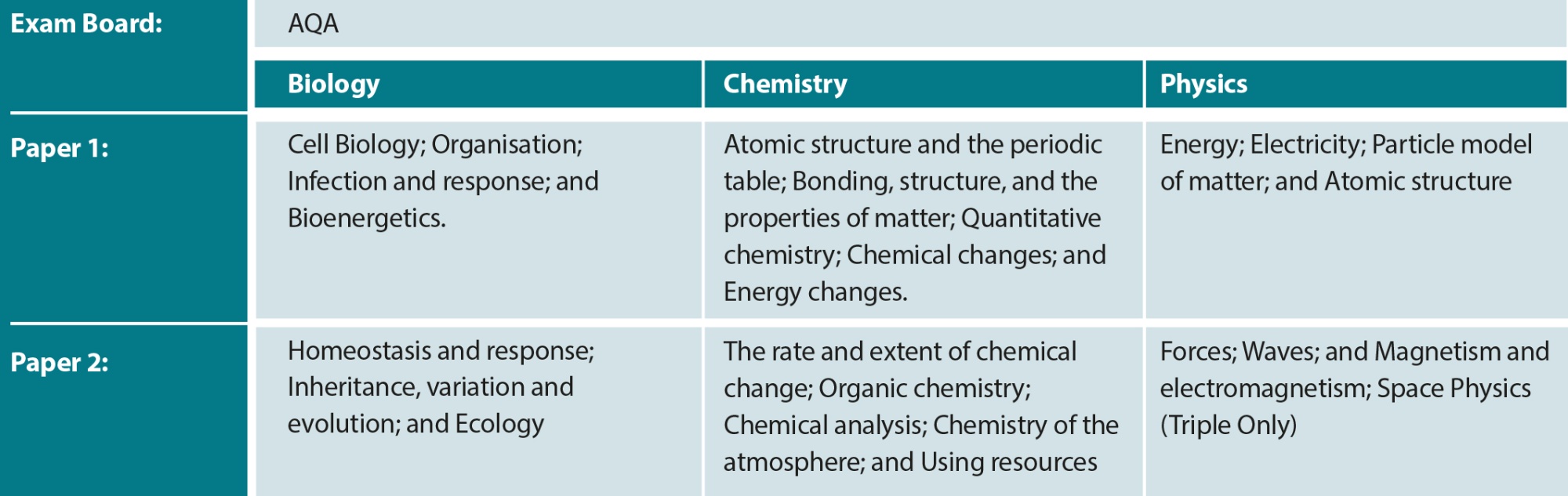
GCSE Combined Science Teaching Schedule
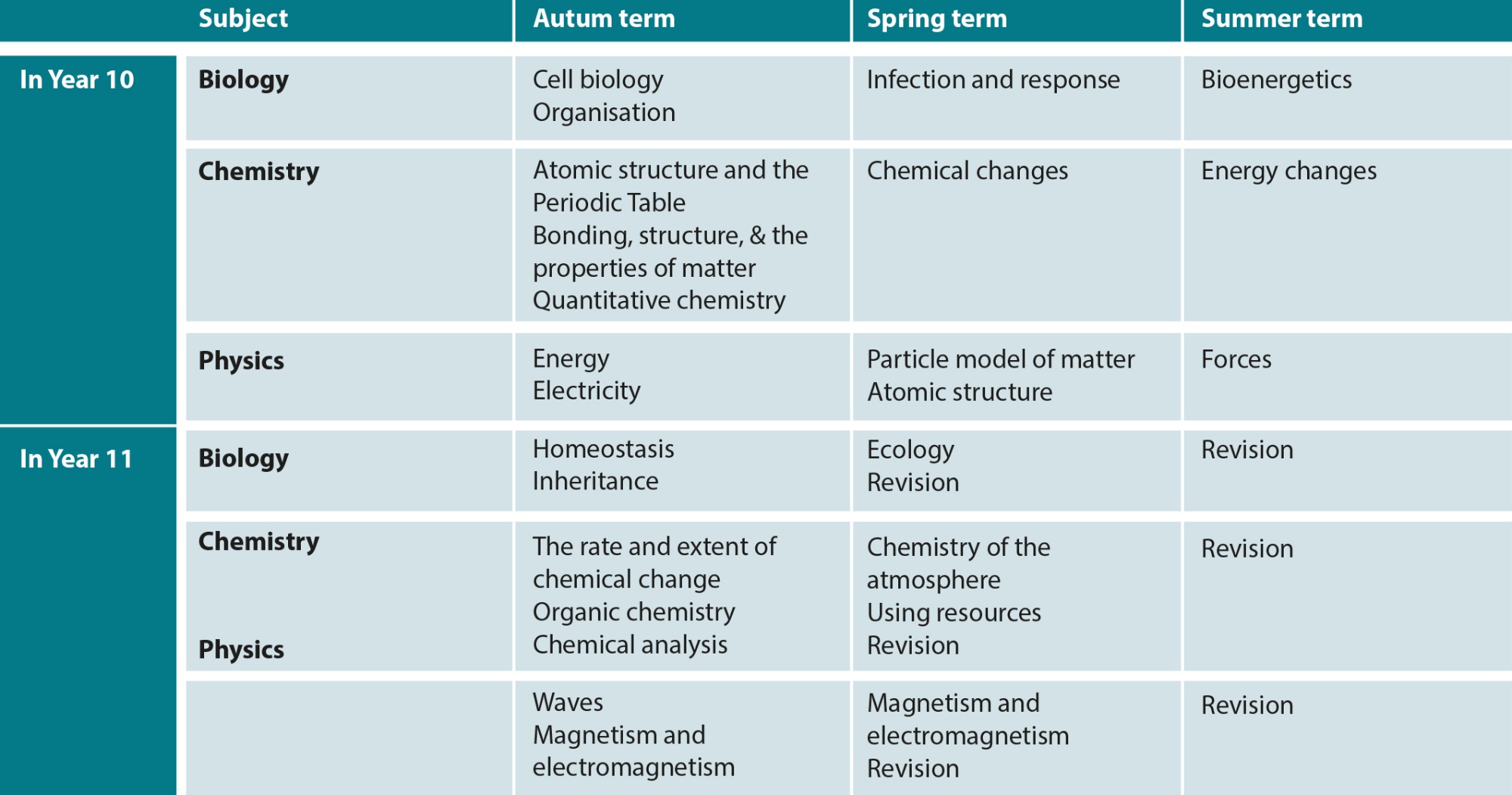
GCSE Triple Science Teaching Schedule
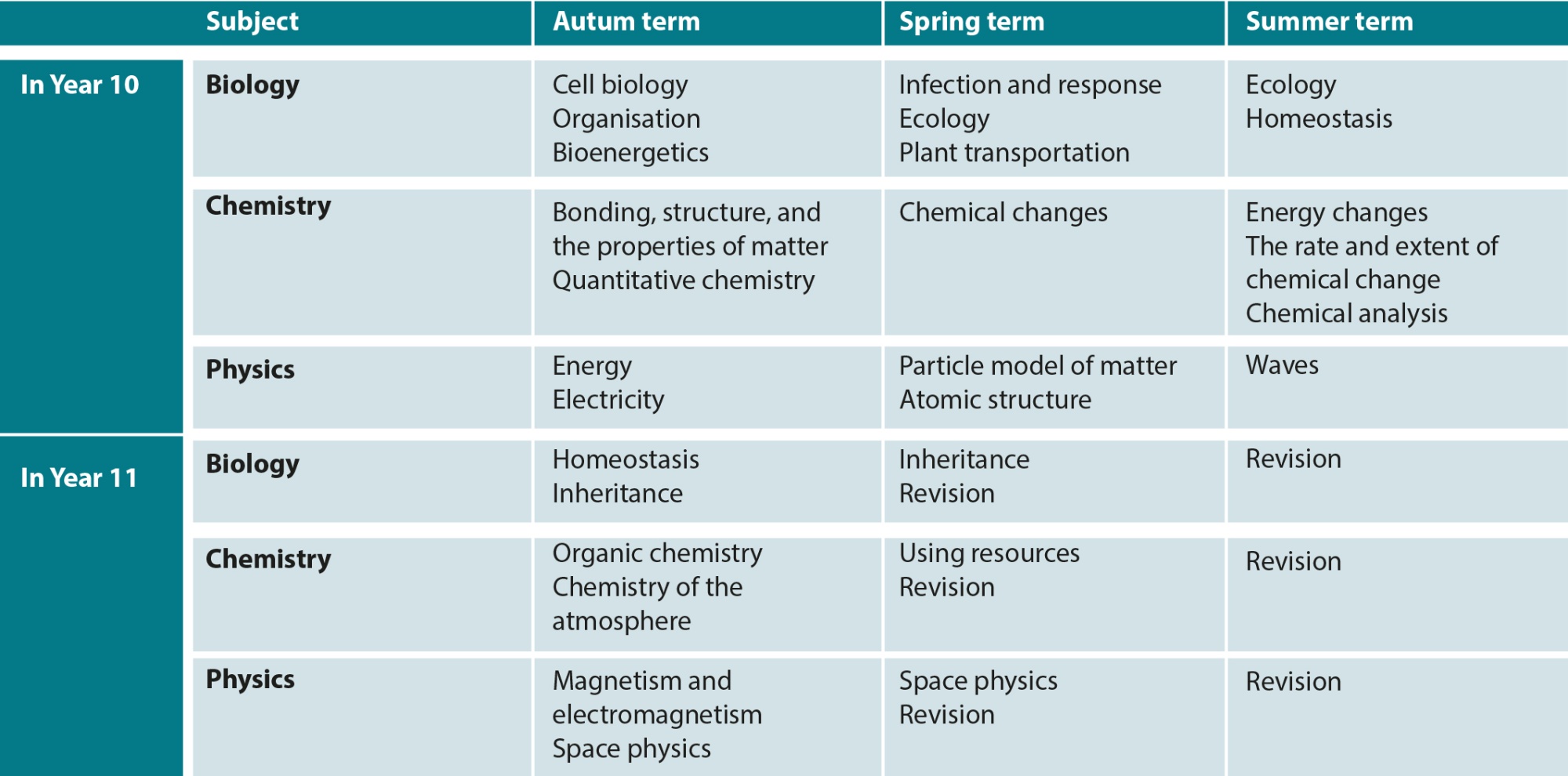
A level Sciences
A Level Biology, Chemistry and Physics
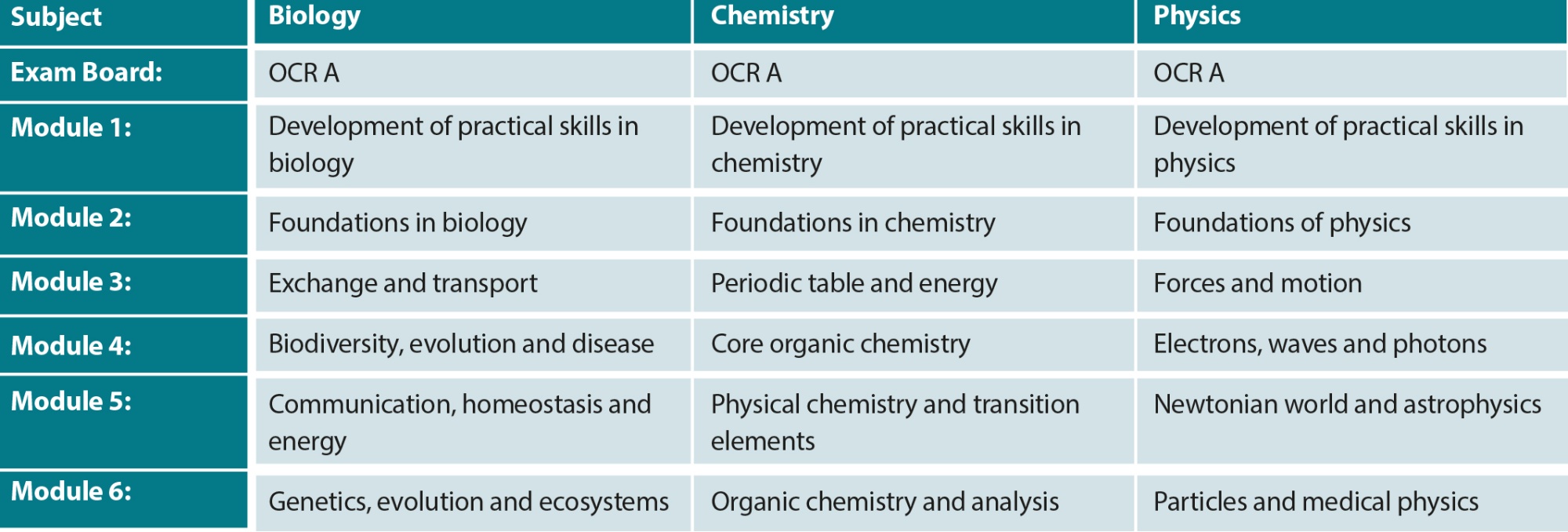
A Level Biology Teaching Schedule
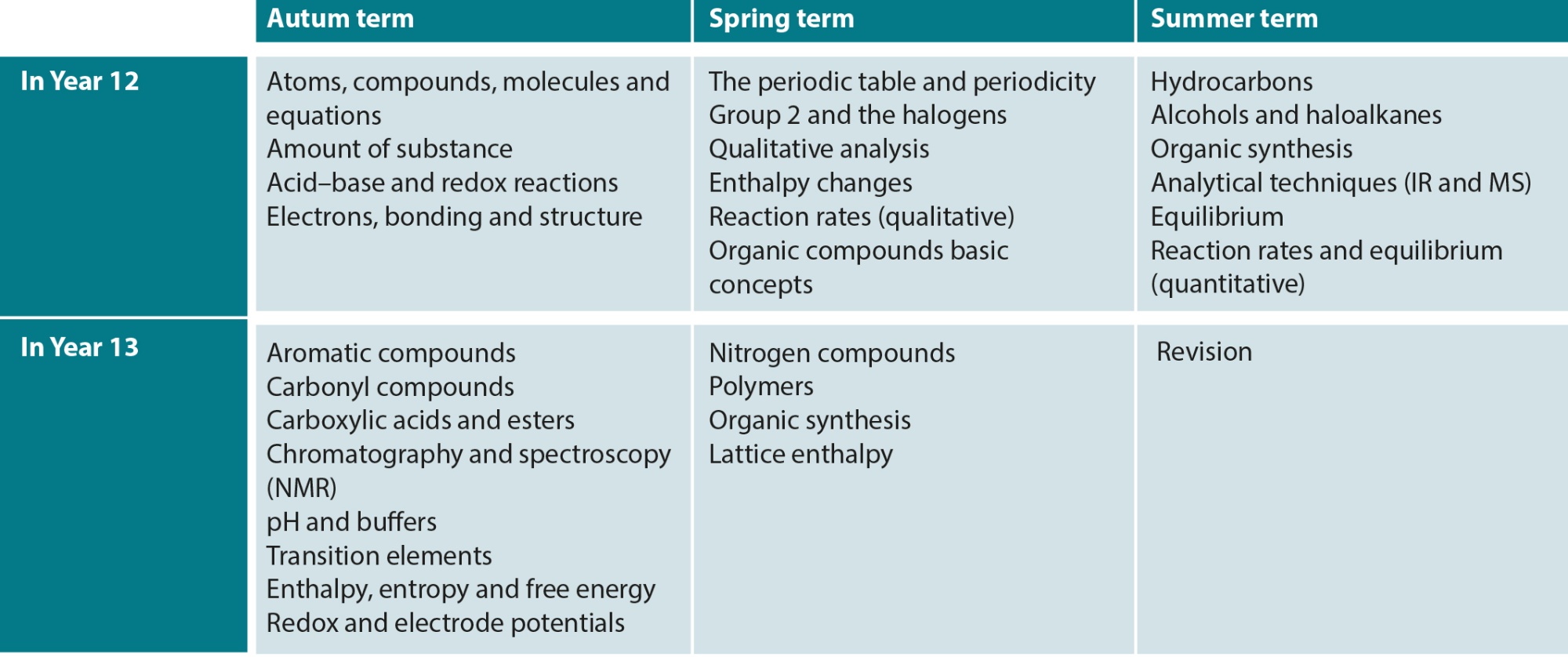
A Level Chemistry Teaching Schedule
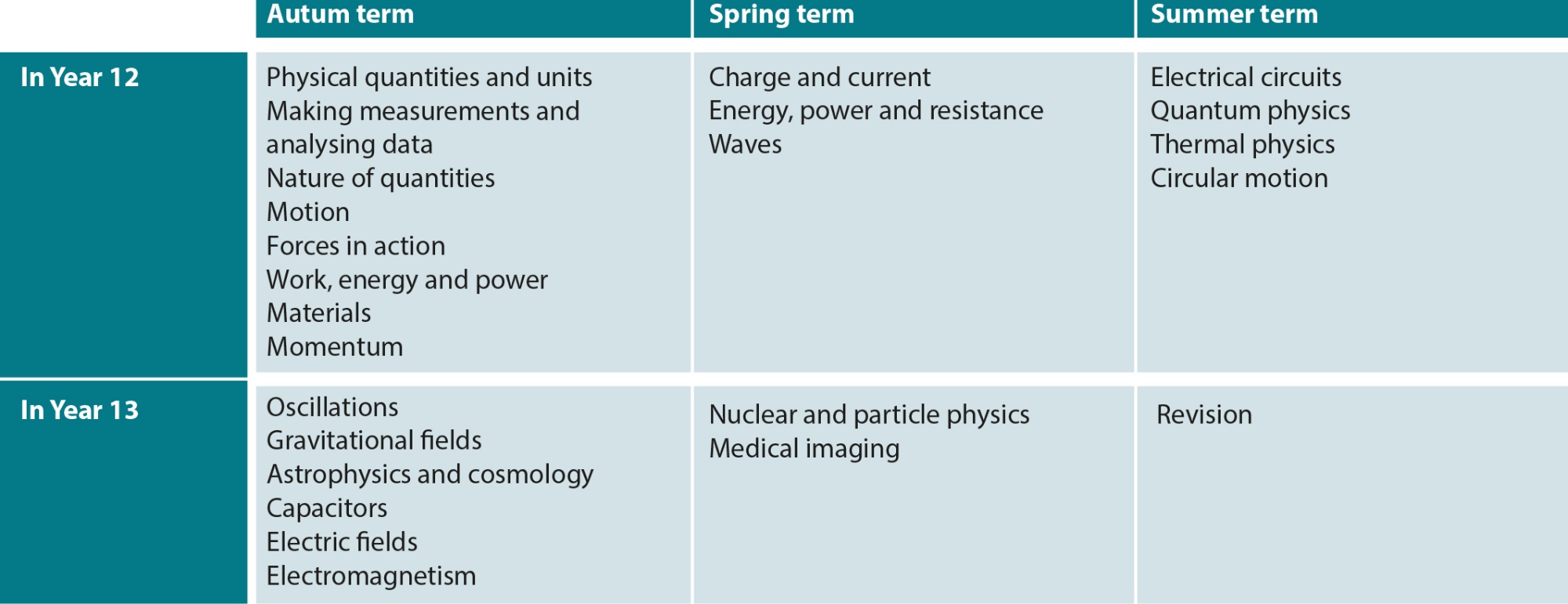
A Level Physics Teaching Schedule
Resources to help with classwork or extended work, can be found on Frog.
Mr T Beecvham – Head of Science, Dr A Grey-Areben – Head of Biology, Miss T Navaratnam – Head of Chemistry, Mr J Dowie – Head of Physics, KS3 Coordinator – Mr D Pereira Lopes, KS5 Coordinator: Mr J Dowie, and Lead Practioner – Mr J Garlic.
Other members of the team are: Mrs D Ayres, Mr Y Bashir, Mr M Clarke, Mrs H Corea, Mrs T Forno, Mrs V Kaarthi, Miss K Ioannides, Mrs R Kothandaraman, Mr J Mirtschin, Miss I Shandulovska, and Mr L Sohanpal.
Members of the science technician team are Mrs A Sturdy and Mrs J Ingle.